
Rope & Suspension
Suspension is not about being lifted. It is about being still enough, under gravity, to feel what it has always been saying.
by CraigJustCraig
First, the same word of clarity. I'm not a doctor, and this is not medical advice. I'm also not going to teach you to suspend anyone from a blog post. You can't learn that from prose, and I won't pretend you can. If you want hardpoints, uplines, and the mechanics of a lift, you learn those in a room, hands on rope, with someone who can stop you. This is about the decision that comes before any of that.
Now, let's talk about it.
The practice is named C4 Suspension. People assume that means the work is about the lift. The drama of it. The body in the air. It isn't. The lift is the loudest part of the practice and the smallest part of the point.
This is a companion to Rope and Anatomy: A Somatic Guide. That guide is the foundation. The nerves, the blood, the bone, the breath, the nervous system underneath. Read it first. Everything here sits on top of it. Suspension doesn't replace any of that anatomy. It loads it harder, in fewer places, with no floor to catch what goes wrong.
So this guide does two things. It tells you the truth about what changes when the body leaves the ground. And it teaches the one decision the anatomy guide names and then sets aside: when to go vertical, and when not to.
Suspension is not about being lifted. It is about being still enough to feel what gravity has always been saying.
There's a name for the part the lift serves. Suspension is the act, the body leaving the floor. What it reaches toward, the spiritual elevation, the new state of being, I call ascension.
This profoundly influenced my approach to rope suspension, a practice I refer to as “ascension,” symbolizing a spiritual elevation and connection.
The Philosophy Behind the Rope, by CraigJustCraig
So this guide holds both. The suspension, the body leaving the ground and everything that gets more dangerous when it does. And the ascension, the reason anyone takes the risk at all. Let's start with what suspension actually is.
What Suspension Is
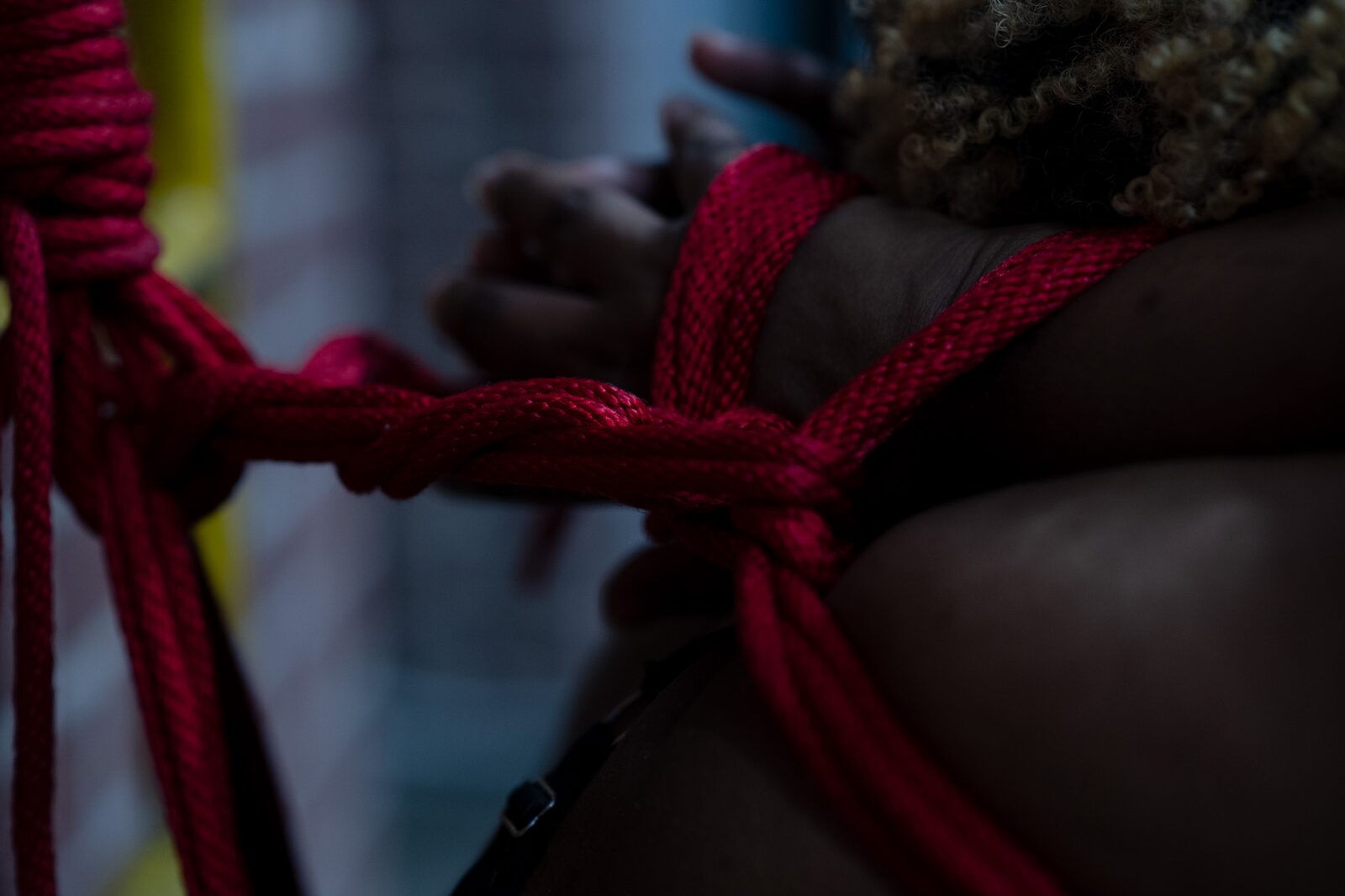
On the floor, the ground holds the body. The rope shapes it. Gravity is still there, but the earth is carrying the load, and the rope is mostly about position, pressure, and contact.
In suspension, the rope carries the load. All of it, or part of it. The body's weight stops passing into the floor and starts passing into the rope, into the knots, into a single point overhead, and back into the frame or the beam or the ring holding everything up. That's the whole difference, and it changes everything downstream of it.
When you take the floor away, you take away the body's escape route. On the ground, a person can shift a hip, drop a shoulder, take pressure off a numb hand without anyone deciding to let them. In the air, they can't. Whatever the rope is doing, it keeps doing until you change it. The bottom can't relieve a single point of pressure on their own. That is the central fact of suspension, and most of its risk comes straight out of it.
The Forms
There are three you need to know by name, in order of what they ask.
Some of the body is supported by rope, some by the floor. One foot down, a knee on the ground, the chest lifted while the legs carry weight. The load is shared. The body still has an anchor to the earth, which means it still has somewhere to send weight and somewhere to find relief. This is where suspension is learned and where most of it should live for a long time. Most of what people want from going vertical is already here.
The body is held entirely by rope. Nothing touches the ground. Every pound of that person is now running through the rope, the knots, and the hardpoint. The margins shrink. Time matters more. A single failure has nowhere to dump the load except the body it's wrapped around.
Inverted suspension
The body is held upside down, head below the heart. This is its own animal. Blood pools toward the head. Pressure climbs behind the eyes and in the skull. Orientation scrambles, the inner ear loses the floor, and the bottom's read on their own body gets less reliable exactly when you need it most. Inversion is the deep end. It belongs to people who have years under them, not months.
A body can move through these in one session. Up into partial, into full, inverted for a held moment, back down. Each transition is a moment where load shifts fast and something can go wrong fast. The transitions are where the work is hardest, and they are not the subject of a primer. They're the subject of years.
What Vertical Adds
The anatomy guide already taught you the body you're touching. Suspension doesn't introduce new anatomy. It concentrates the old anatomy and removes your margin for error on every bit of it. Here's what changes when the floor leaves.
- Load concentrates. The same weight funnels through a few bands of rope. A chest harness that felt fine bearing nothing now bears a person, exactly where the radial nerve loads hardest, and you can't simply loosen it because the load is the point of the tie.
- Circulation fights gravity. Blood pools where the body hangs lowest. A limb left below the heart, held by a tight band, loses its drainage and its supply at the same time.
- The bottom's read gets worse. Endorphins climb and dull the warning signals. A numb hand reads as part of the experience. A nerve going quiet reads as floating.
- A fall is a real outcome. A failed knot, a slipped line, a hardpoint that wasn't what someone thought. The bottom is bound and cannot catch themselves, and in an inversion the head and neck land first.
Load concentrates
On the floor, a body's weight spreads across whatever it's lying on. In the air, that same weight funnels through a few bands of rope. The chest harness that felt fine bearing nothing now bears a person. A line that sat comfortably across the upper arm is suddenly the thing holding them up.
This is why the nerves go from a concern to the concern. Go reread the nerve section in the anatomy guide. The radial nerve, winding around the outside of the upper arm, is exactly where a suspension chest harness loads hardest. The same wrist drop, the same months of recovery, except now the rope holding the nerve is also holding the body, so you can't simply loosen it. The load is the point of the tie. The legs carry their own version of this once a hip harness or an ankle line is taking real weight. Femoral, sciatic, peroneal. Same nerves, far more force.
The principles from the anatomy guide carry straight over and matter more here. Time, tension, evenness, width. A suspension line wants to be wide, evenly tensioned, and on the body for less time, because everything it does, it does under full weight.

On the floor, circulation has a fair fight. In suspension, you add gravity as a second force, and it doesn't quit. Blood pools where the body hangs lowest. A limb left below the heart, held by a tight band, loses its drainage and its supply at the same time. The fainting chapter in the anatomy guide is now operational, not theoretical. A relaxed body held vertical can drop. Add the fast transition out of rope, all that trapped blood flooding back at once, and you have the textbook setup for syncope, except the person is in the air when it happens.
The limb you'd give twenty minutes on the ground gets less in suspension, under full load and full gravity.
A relaxed body held vertical can faint in this window. Watch the clocks harder than on the floor.
A suspended limb has one clock, and you are it. Nobody else is counting.
Carotid compression to unconsciousness. Stay off the neck, in the air as on the floor.
The bottom's read gets worse
Here's the one people miss. In suspension, the bottom's ability to report their own body degrades right when you need it sharpest. Endorphins climb. The neurochemistry of the lift, the dopamine and the endorphins and the oxytocin, the thing that makes suspension feel the way it feels, also dulls the warning signals. A numb hand reads as part of the experience. A nerve going quiet reads as floating.
The physical discomfort, restriction, stretch, or suspension becomes balanced with safety, trust, and intimacy, creating a complex cocktail of sensations that can feel euphoric, even ecstasy.
The Philosophy Behind the Rope, by CraigJustCraig
That cocktail is the gift and the hazard in one. A bottom deep in it will under-report. They will tell you they're fine because they genuinely feel fine, while a nerve is being crushed they can no longer feel. So the top's job changes. You stop waiting for the bottom to raise the alarm and you run the checks yourself, out loud, on a schedule. Movement over sensation, the same as the anatomy guide says, except now you assume the sensory read is compromised and lean entirely on what they can still move.
A fall is a real outcome
On the floor, the failure modes are nerve and circulation injuries. In suspension, you add one the floor doesn't have. The body can fall. A failed knot, a slipped line, a hardpoint that wasn't what someone thought it was. The bottom is bound, so they cannot catch themselves and cannot break the fall, and the part of them most likely to land first is the part highest in an inversion, the head and neck.
This is why suspension is taught hands-on and why this primer will not teach the rigging. The gear, the hardpoint, the redundancy, the way a line is dressed and locked so it doesn't fail under shock load. Those are skills with no margin for a blog-post version. You learn them in a room from someone who has caught the mistakes before you make them.

What Suspension Reaches
Everything above is why suspension is dangerous. This is why people do it anyway, and why I built a whole practice on it.
There's a state suspension reaches that the floor only borrows. When the body fully leaves the earth, something in the nervous system lets go that won't let go any other way. The last anchor is gone. The bottom can no longer hold any of their own weight, can no longer make the smallest correction, can no longer do anything but be held. And in that total helplessness, for the right person at the right time, the body finally stops bracing.
The act of being bound can become so deeply intoxicating, especially when it quite literally removes the body from the earth. In these moments, the participant is no longer tethered to the ordinary gravity of life. They are thrust into a liminal space, an unknown, weightless realm where sensation, breath, and stillness blend.
The Philosophy Behind the Rope, by CraigJustCraig
That weightless realm is the thing. Stillness on the floor is something you choose and keep choosing. Stillness in full suspension is something the rope makes inarguable. The body held in the air, with no possibility of relief and no way to flee into doing, gets dropped into the present so hard it has nowhere else to be. The scattered mind goes quiet. The conceptual voice that's always crying out for order runs out of things to manage.
This is the void the book calls Nihilomancy. Bound in body, boundless in spirit. When there's nothing left to do, the body starts to speak, and you can finally hear it.
And this is what the spine line means, and why I give the state its own name. Suspension is the act, the body leaving the floor. Ascension is what the act is for. The lift is the means. What you're after is a stillness deep enough that the body stops performing and starts telling the truth. Gravity has been pulling on this person their whole life. Suspension is the first time they're held still enough, and helpless enough, to feel it and feel everything it's been carrying.
Ascension: Transformation elevates self-empowerment, self-actualization, and growth. Rope can ascend someone into a new state of being.
The Philosophy Behind the Rope, by CraigJustCraig
That's the access suspension specifically gives. Total surrender of control, ego, movement. The body undeniable. A session that ends in tears or laughter or silence because something that had been held for years finally had room to move. The floor can walk a person toward that doorway. Suspension can put them through it.
Which is exactly why you don't rush it.
The Decision to Go Vertical
The anatomy guide lists rushing into suspension too early as the first common mistake. This is where that mistake gets named and stopped. Going vertical is a decision, and most of the time the honest answer is not yet.
Two people have to be ready. Not one. Both.

You hold a life in your hands on the floor. In the air, you hold it with no floor to share the holding. So the bar is higher, and it's specific. You know the anatomy cold, from your hands, not a chart. You've put in years on floor work and partials, not weeks. You've had nerve scares and circulation drops happen under your rope and you handled them calmly, because they will happen and the question is only whether you panic. You can build a harness that bears weight evenly, and you know why each line is where it is. You understand your gear, your hardpoint, and your redundancy well enough to bet a person's spine on them, because that is what you are doing. You have EMT shears in reach and a real plan for getting a body down fast and controlled if everything goes wrong at once. And you know your own ceiling, and you tie under it, not at it. If any of that made you flinch, you have your answer. The flinch is the teacher.

Suspension bottoming is not passive and it is not easy. It is one of the hardest, most demanding things a body can do, and the air makes it harder. A ready bottom has spent real time in partials and knows how their own body answers rope under load. They know their nerve patterns, their circulation, where they go numb and how fast. They can tell the deep good ache of a held position from the bright electric warning of a nerve, and they will say so the instant they feel the second one, even with the endorphins telling them to float. They have negotiated their injury history, their conditions, their medications, honestly. And they trust this specific top, in this specific room, today. Not the idea of being suspended. This person, now. A bottom who wants the picture of suspension more than the reality of it is not ready. The body knows the difference even when the mind is sold.
When Not To Go Vertical
Some of these are absolute. Learn them as lines you don't cross.
- Either of you is new. Build years on the floor first. The floor teaches everything suspension needs.
- There's any alcohol or any other vasodilator in the room. In suspension it's a hard no.
- The bottom has a condition suspension sharpens. Circulatory issues, blood pressure, POTS, a recent injury, anything that compromises blood flow or the spine.
- The trust isn't there yet. If you're suspending to prove something, to perform, to impress a room, get out of the air.
- Something feels off. The body, the gear, the room, your own focus. If your gut is talking, the answer is the floor.
- You're tired, rushed, or watched. None of those are conditions for the most dangerous thing we do.
- Negotiate conditions before, not in the air.
- Keep it on the floor every single time the answer isn't a clean yes.
- Trust the gut that says wait. Suspension punishes the session you forced.
- Remember the floor is not the lesser practice.
- Know that almost all of the real work already lives on the ground.
- Spend the longest refusing. The people who suspend best are the ones who did.
The skill in suspension isn't the lift. It's the no. Knowing when the body in front of you is ready to leave the ground, and having the discipline to keep it on the floor every single time the answer isn't a clean yes. The floor is not the lesser practice. The floor is where almost all of the real work already lives, and the people who suspend best are the ones who spent the longest refusing to.
Before, During, After
The whole apparatus from the anatomy guide applies, and applies harder. I'm not repeating it. Go get it there. Food, hydration, breath, stretching, negotiation, CSM checks, aftercare, the signs of drop. All of it is load-bearing in suspension. A few things shift in the air.
Suspension looks like it's about defying gravity. Getting a body off the earth, holding it in the air, the drama of the float. It's the opposite. The lift is just the only way I know to get a person still enough, held enough, and out of their own control enough to finally feel the pull that's been on them their entire life and feel everything it's been dragging. You learn the anatomy so the body comes home from the air whole. You learn the decision so you only take it up when it's ready to go. And you learn the no, the long patient refusal to leave the floor, because that's where the love is. Anyone can pull a body into the air. Knowing when not to is the whole craft.
Gravity has always been saying something. Suspension is one way to get quiet enough to hear it.
Stay on the floor until you can't.
Ashe.
Resources
This primer frames the risk and the decision. It does not teach the rigging. That you learn in the room, hands on rope. Start with the foundation, then keep going.
Start with the foundation
- Rope and Anatomy: A Somatic Guide · the companion to this primer. Nerves, circulation, fainting, and aftercare in full. Read it first.
- The Philosophy Behind the Rope · the longer version of all of this, by CraigJustCraig
- Come to a class · suspension is learned where it's actually learned, in the room, hands on rope
On circulation & nerves
- RVA Rope, "More on Circulation and Nerves" · the most thorough breakdown there is
- The Rope Bottom Guide by Clover · free PDF
- Rope Study and Shibari Study · free safety and somatics courses
- Remedial Ropes, Crash Restraint, and Esinem
One more time, because it matters more here than anywhere. I'm not a doctor and this isn't medical advice, and a blog post cannot teach you to suspend a human being. This is how to think honestly about the risk before you go looking for the skill. Learn the skill live, from someone who can catch you. If something in your body stops working, or you faint in ways you can't explain, see a medical professional.